The flame of Schiedam
Jenever Museum in action
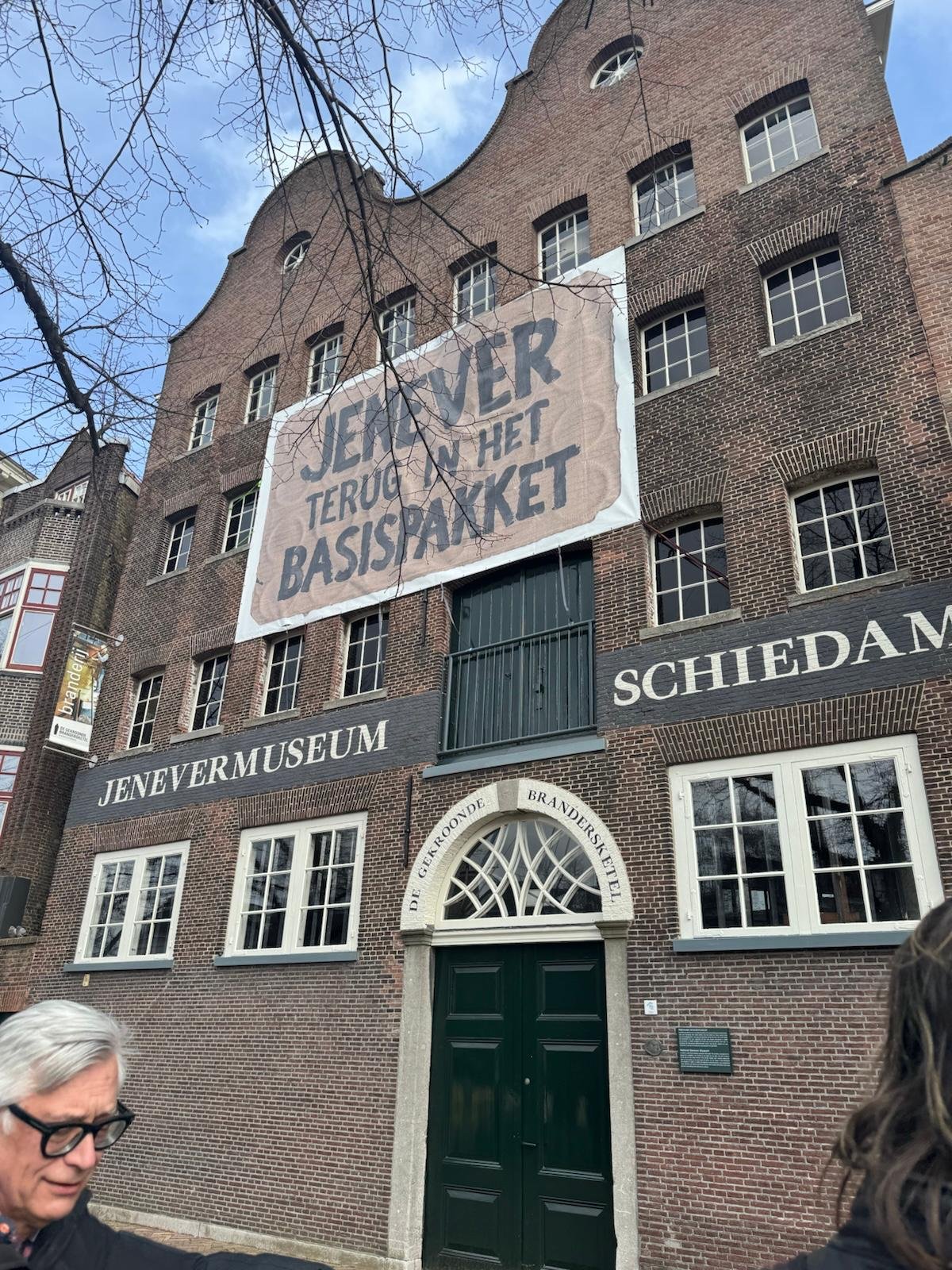
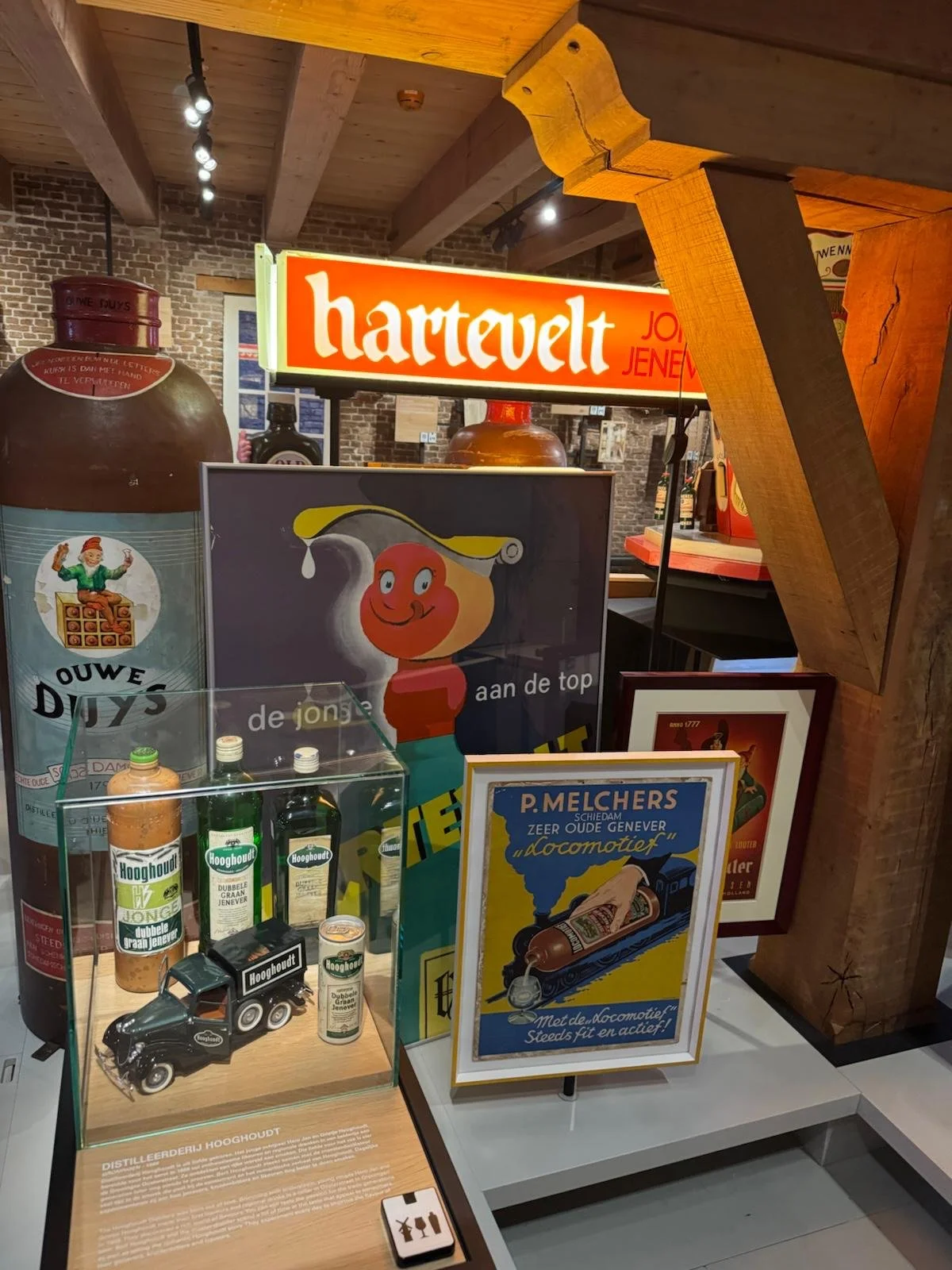
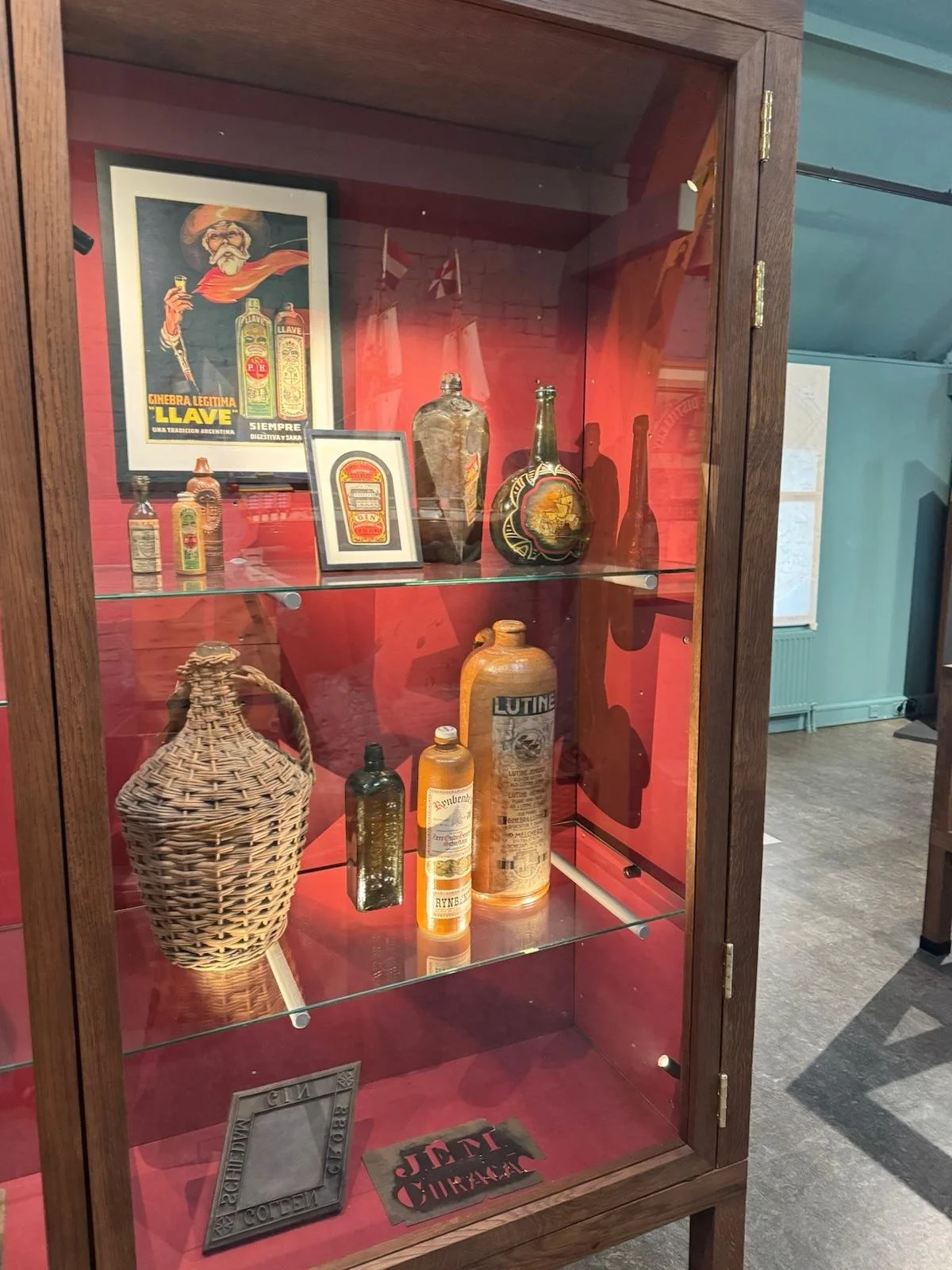
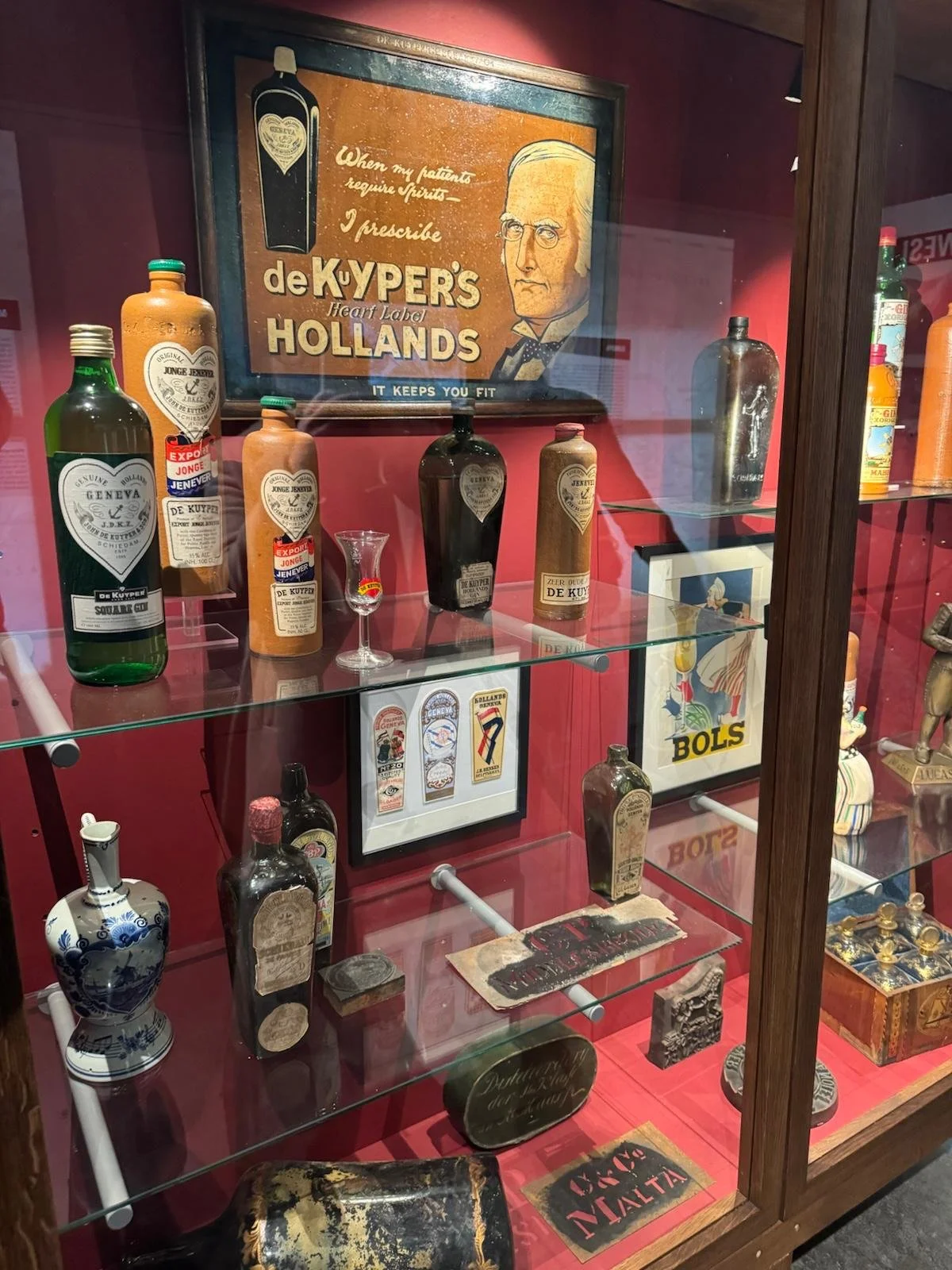
On Lange Haven number 74 we find the one and only Jenever Museum of the Netherlands. It houses a staggering amount of history, advertising, knowledge and production of this ancient spirit.
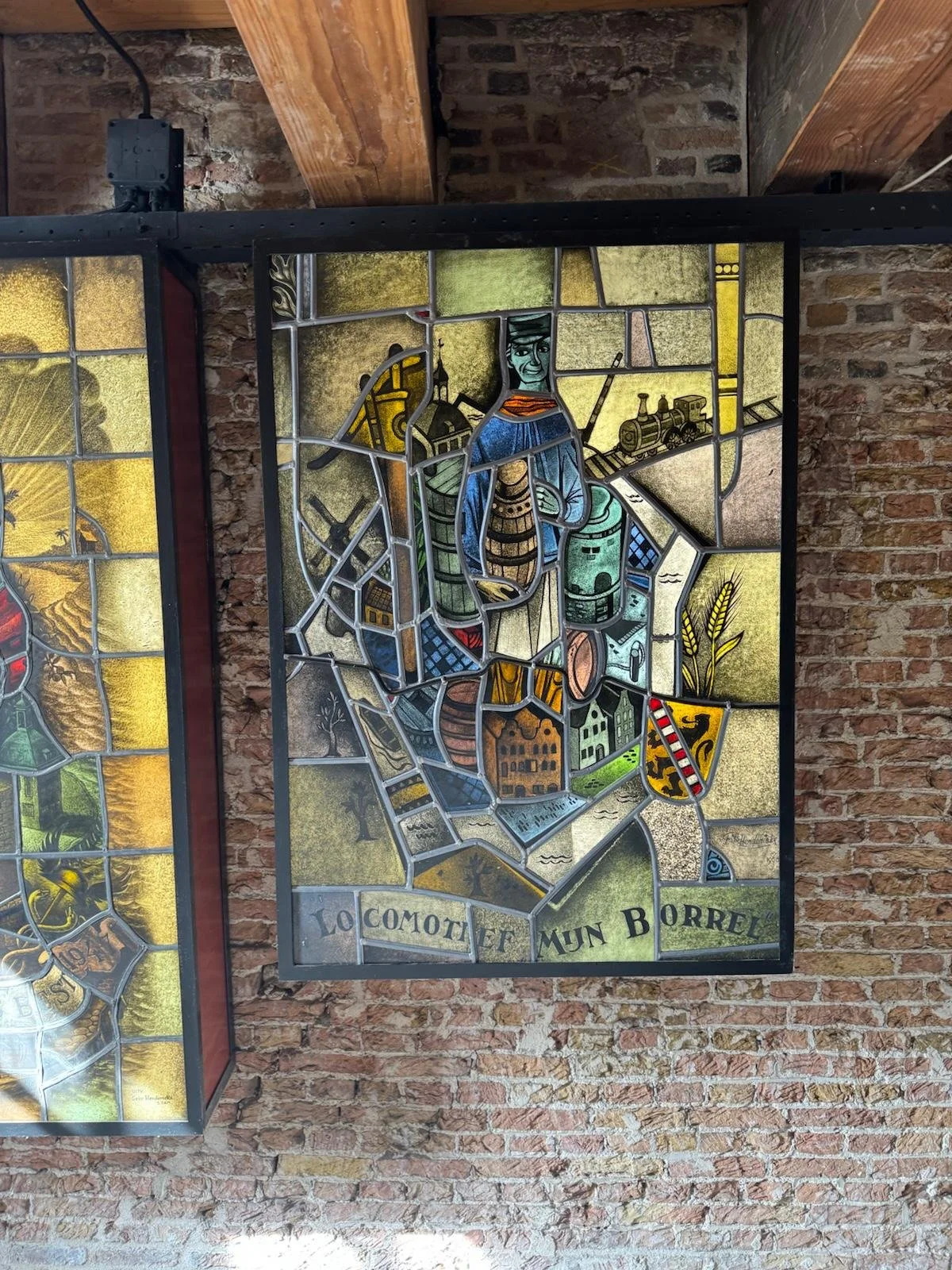
The Locomotive since 1996
The Jenever Museum is housed in a building that already housed a legendary distillery starting in 1794. It was known as “the locomotive” but changed name to “the crowned burner’s kettle” and it is the same crown that is the signet of the distillery, as well as being featured in the top corner of the bottle. In ancient times, fermentation (branderij) and distilling (distilleerderij) were strictly seperate businesses and so had to be housed in separate buildings. This is why the Jenever museum consists of twoe buildings that reflect this (administrative) strict separation. You can recognize a (former) distillery when the door is not quite in the middle. This was so the wide windows could open and the stills could be reached. Additionally lots of grain storage was needed, as wind was needed to power the windmills and so the grains needed storing when no wind was blowing. The distilleries were also at one end of the street, and the houses of the wealthy on the other. This was due to the foul smell of distilling and waste these distilleries produced! The many distilleries earned the town the nickname of “Zwart Nazareth” because of the black smoke and black canal water because of all the waste.
The Seal of confusion
Since 1902 there is a seal of real Schiedam Malt Wine Genever. There are only two distilleries that produce in accordance to these strict rules. In fact, even upon its release these rules were considered so strict that many producers acted against it and refused to make genever in accordance. It stipulates the genever must be made with 100% Malt wine, and it must be made in Schiedam; distilled for a (minimum) of three times. Strangely enough, the Schiedam seal does NOT stipulate juniper berry being necessary......
Supporter of all things holy
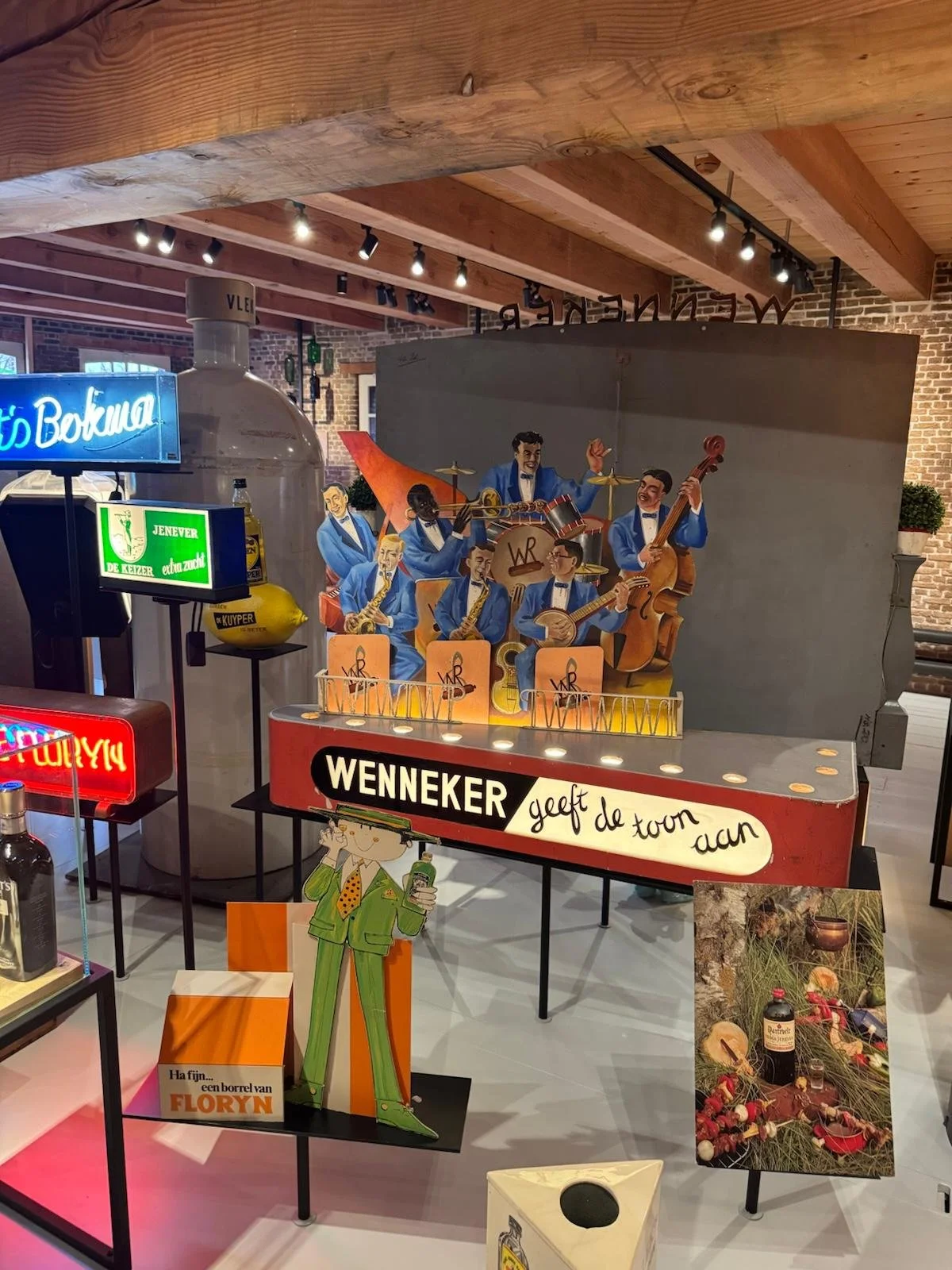
The Jenever museum itself is funded by the government on one end, several of the genever producers on another, and the remaining funds come from entry tickets and bottle purchases. Nolet is one of the key sponsors, leading to them having their own “tour” through the museum, although most producers have supported it in their own way, if only by gifting various old bottles, miniatures and avertising goods to be displayed.
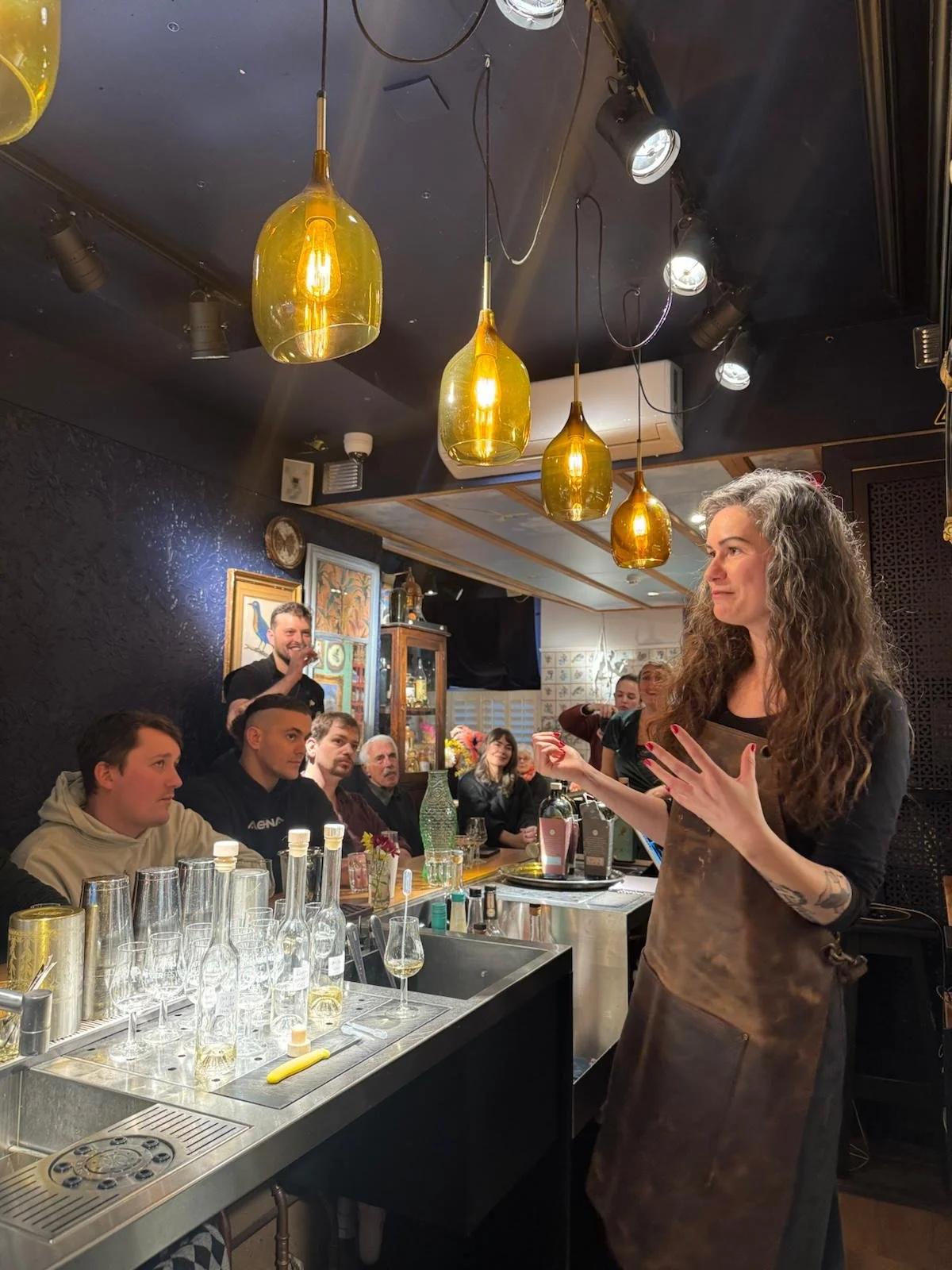
The Jenever Museum celebrates all genever brands big and small, from Schiedam or elsewhere. It organises the Jenever festival where many distilling enthousiasts and small brands gather to share their goods. It also organises courses on distilling, from which many go on to found their own distillery.
What makes the crown glow
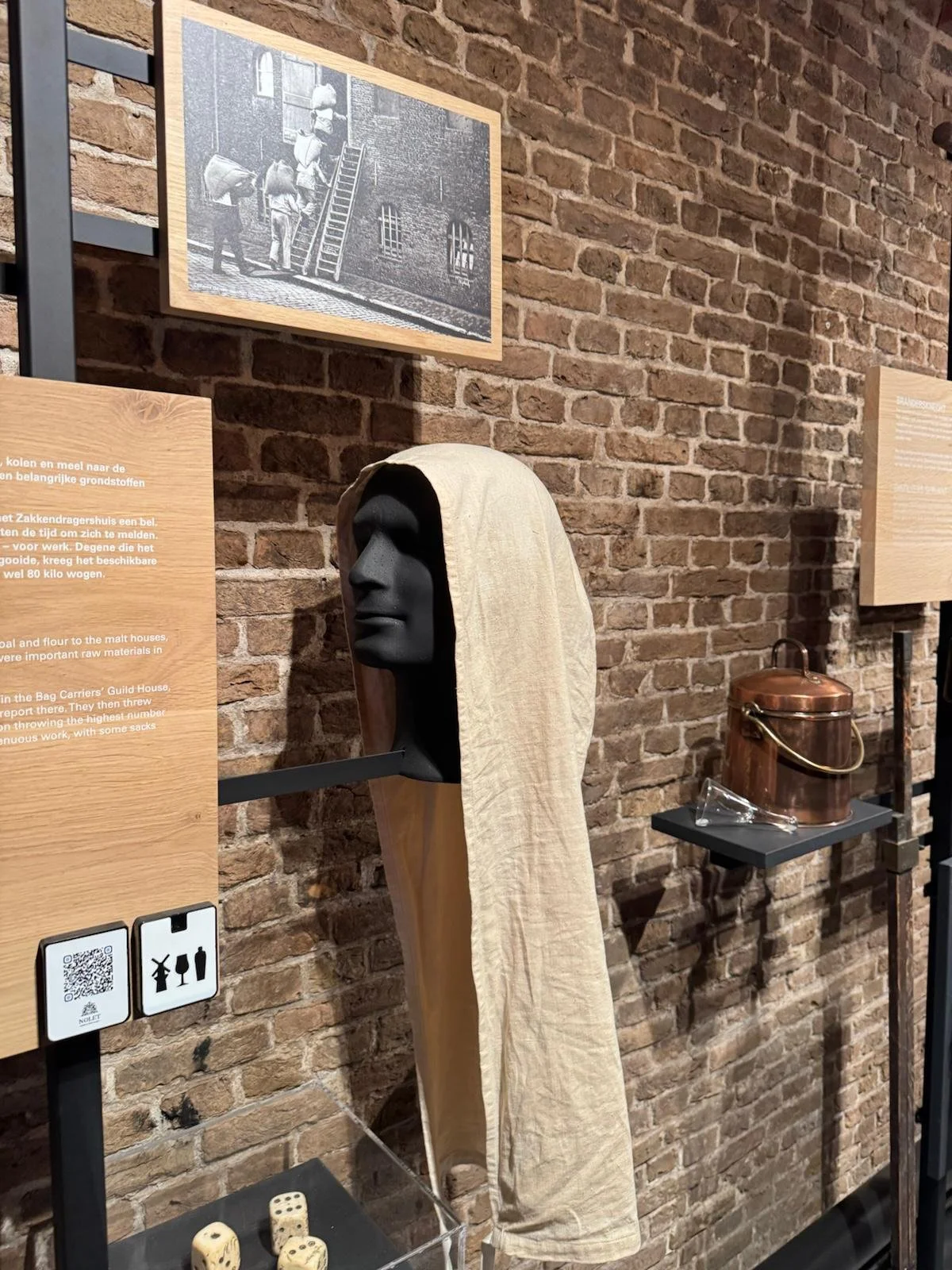
A special part of the exhibition is shown about the heavy labour back in the days of the people involved in the industry. Among them, the grain-carriers. Stalky, young, strong men that had to carry as many bags of grain up tiny steps to be milled and fermented. They were paid by the step, and to decide who got to work and who got to stay behind they would throw the dice on a box. If someone had a “bad throw” twice and could not work they would still provide him with some bread.
The sign of the bag carriers was a hemp bag they wore over their heads. If one was too old to carry the bags, they had to wash the bags. Hence we still call a no good person a “zakkewasser” (Bag washer). If a bag carrier died, his wife got the “head bag” and could sell it to a new potential worker as it allowed him to carry on the job as you weren’t allowed to do it without one.
Another interesting job was that of “bottle sniffer”. As people brought their bottle for refilling, one person smelled the bottle to ensure it was not used as chamber pot, as it would render the bottle unusable.
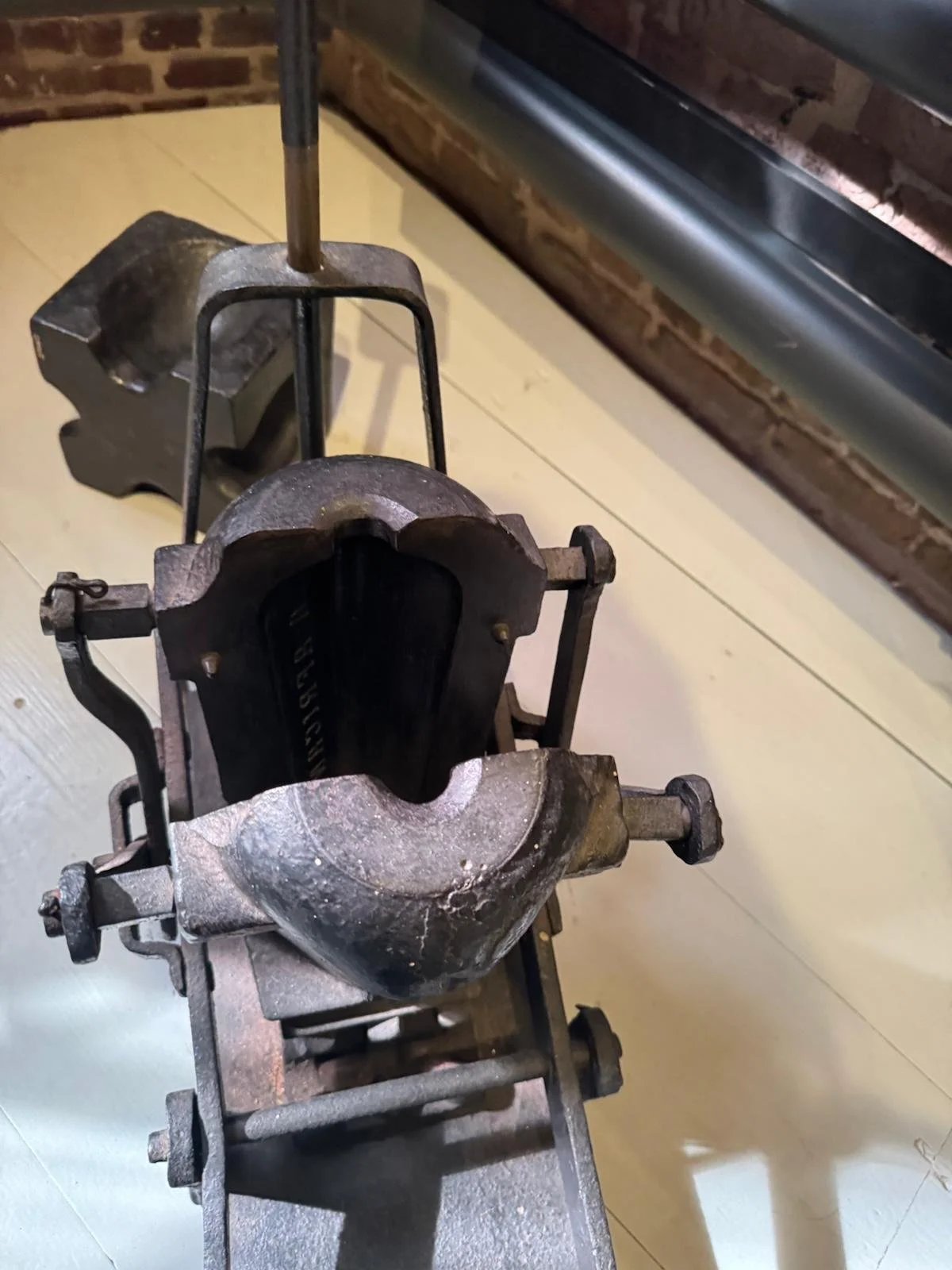
In terms of production, the Jenever museum tries to do everything according to the way it would have been done in the 17 th century. In many cases this means a lot of labour, and cost ineffective practises that would be hard to acheive commercially. Barrels are hand-rolled, liquid is hand-pumped. Stills are hand-fired and cleaned.
But thanks to the volunteers and not having a commercial goal they are able to do it this way. Back in the day there were over 400 distilleries in Schiedam alone, and the waterways of canals and windmills reflect this. Ships would arrive at the first canal, drop off supplies of grains at the mills, and follow the water to pick up genever and get back on the water.
Make the magic happen
While most of the people working at the jenever museum are volunteers, they are overseen by a master distiller. Currently there are 9 male volunteers, overseen by a female master distiller. These are people with a great future, judging by the track record. Here are some former distillers of the jenever museum that went on to do great things:
-Jaco van der Leun, currently master distiller at Loopuyt gin. Their very rare genever is available at Dutch Courage in limited quantities.
-Benno Klopman, owner of Stokerij Klopman, producer of a whole range of gins.
-Alwine van Winsen, owner and distiller at Serious Bee, making genever and honey distillates.
-Rutger Vismans, former bartender and now owner of “Rudy’s Genever”, also found at Dutch Courage Cocktailbar!
The current master distiller is Renata Gvozden.
What is in the “basement”
The Jenever Museum is not allowed to commercially compete with other genevers on the market directly. It CAN however, sell jenevers at its own liquor store in the museum, and at its bar at the end of the tour. Apart from some very rare producers to be found they also sell their own products. Most, not all, of these are under the “Old Schiedam” label. All of their products are according to the Schiedam Seal. This means that all the genevers they produce is in fact, 100% malt wine. Additionally, they are all presented in the traditional “Kelderfles”, one of the most traditional containers for jenever. Named after a type of box (so not a basement, although Kelder currently means basement) that could carry these bottles without breaking them.
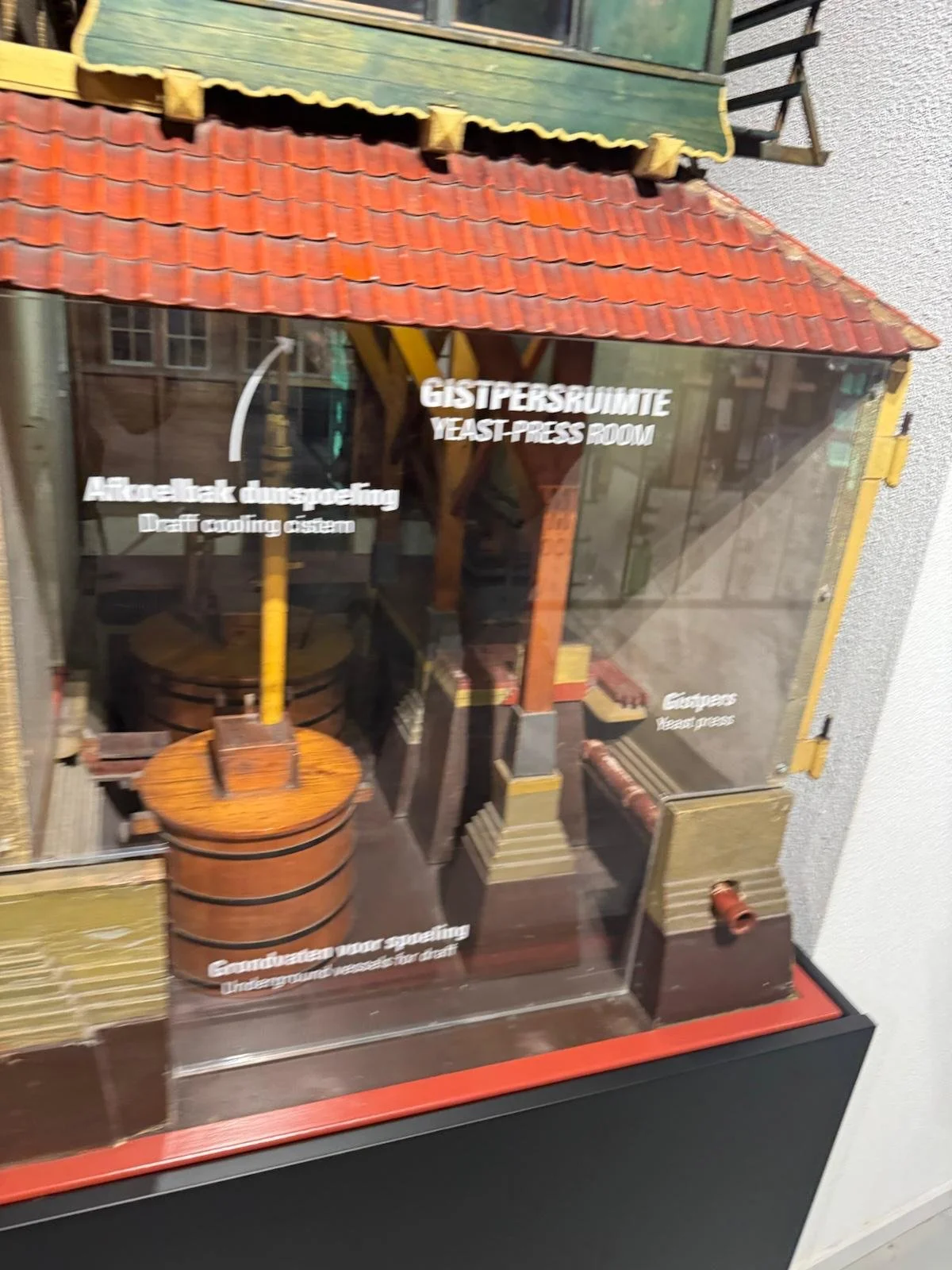
The rye and malted barley is milled for them at Museum Windmill “the whale” which is also part of the ownership of the Jenevermuseum. It is located just a few hundred meters from the distillery, as it would have been hundreds of years ago. Once milled and transported to the distillery, it is fermented in open vats for 48 hours using regular distiller’s yeast. After fermentation the liquid is at 6% ABV when it is distilled for the first time in pot still to 17%. Distilling is done by direct fire and coal, a unique situation as this is banned to do in the Netherlands because of environmental reasons. However, the museum, being a museum, is excempted.
Due to the volume this first distillation takes an entire day to do. Then it is distilled again to 40% and once more until 70%. In between it is stored in front of the stills in large underground vats. This is the old way of doing this and lowers risk of combustion. After the final distillation an essence of juniper is added, before being aged in barrel. At no point is any other spirit or any sugar added in any way. This includes caramel. Possible aging is carried out next before bottling.
The Core Range is as follows:
-Duivelsgeluk. This is the newest in the range, and also the only one not produced in “kelderfles” of the core range. It is made of a combination of Rye and Malted Barley, but no age statement is given, and no Schiedam Seal is seen on it.
-Old Schiedam Original Malt & Rye Genever. Aged for three years in American (Jack Daniel’s Oak) and bottled at 40 ABV it is the (former?) entry level of Old Schiedam.
-Old Schiedam Single Cask. Bottled at Cask strength ~59 ABV, this malt wine genever is aged for three years as well but at higher proof and single cask selection.
-Old Schiedam Original Malt Wine Genever. Aged for extra long 7 years and bottled at 40 ABV.
-Old Schiedam Malt & Rye 10 Year Old. The oldest of the range, still at 40% ABV.
The “Mash Bill” remains the same for all genevers in the core range, and so only ABV and time in the barrel changes. Please note the total production of bottles per year is only around 2000 (!), so one can appreciate the rarity of even the most “basic” core bottling.
Quiet and Proud
Next to their core brand, the museum has two recurring ranges. Stokerstrots (Distiller’s Pride) launches each year at the Jenever Festival taking place around May. It typically features unique botanicals. It has a spotty history, only launching when the festival takes place (so not during Covid), and bottle size and contents vary widely each edition, often with a production of around 400 bottles.
Then there is the Branderswijn (Burner’s Wine). This is a limited edition with a label done by a local artist in honor of the “Brandersfeesten”. This is a week that is consumer oriented to celebrate Schiedam and distilling. Additionally, a collaboration is searched with a different company such as a bakery, chocolatier or pastry shop. This often delivers a very distinct distillate that is often, but not always, aged and contains a sweeter element. For the spices the collaboration is sought each year with the people of Versteegen to supply and inspire the distilling team of around 6 people. These are then called de Smaak makers (taste makers). The editions were previously around 150 bottles in size, although 2025 saw an increase to 400. Certainly a good one for collectors.
2026 saw the 12 th edition featuring a combination of almond, pepper and sesame seed that was accompanied by an almond bun. Did you know Dutch Courage Cocktailbar has a whopping 5 editions open for tasting? That is more than any bar in the world apart from the Jenever Museum itself....
Another collaboration was one between Wynand Fockink and the Jenevermuseum where a 10 year old was released together.
The Rarest Breed
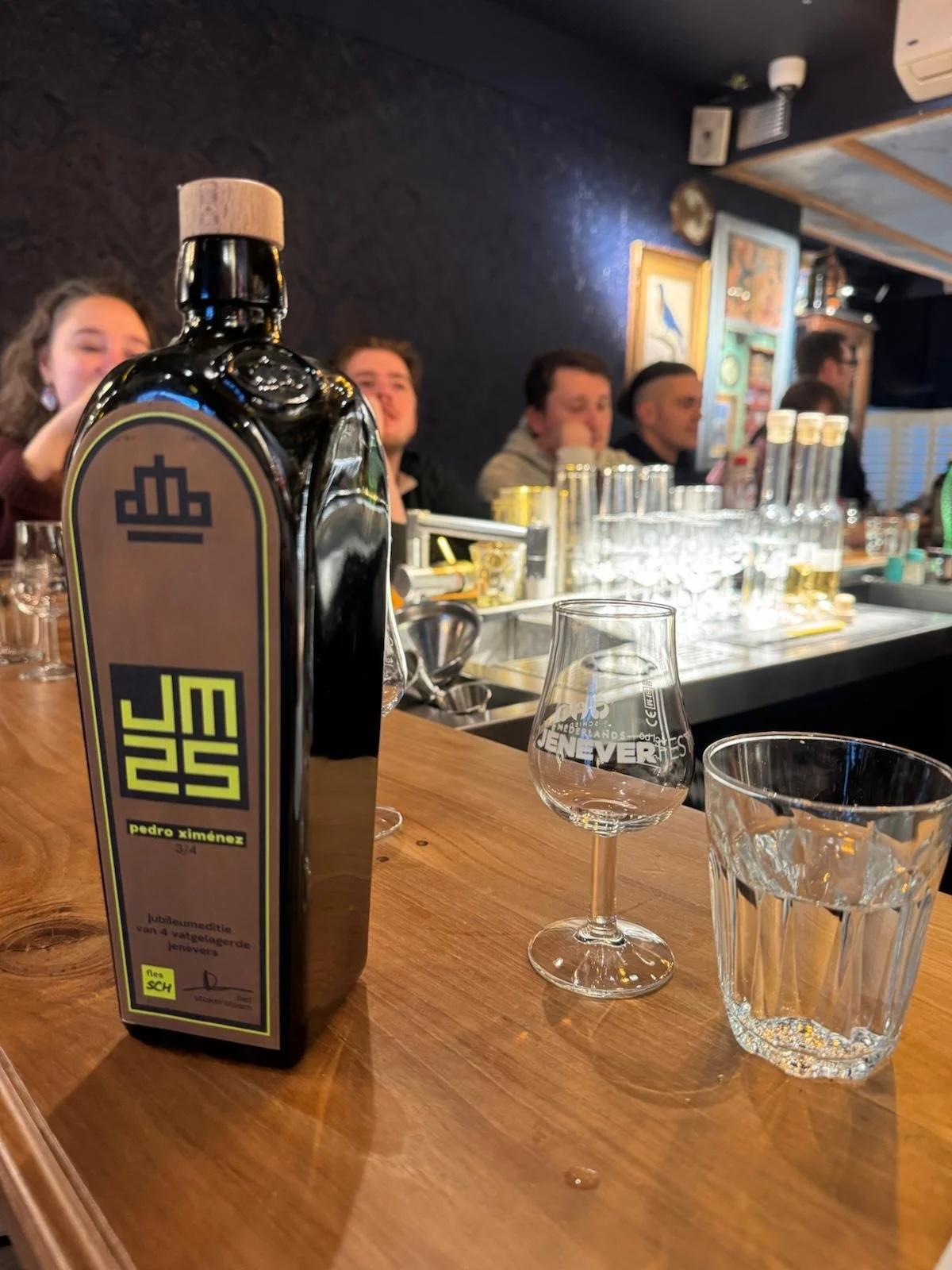
For the 25 year anniversary of the Museum in 2021 they released a quartet of “JM” bottles. Instead of focussing on the botanicals, the focus now was on Barrel aging. For this PX, Moscatel and Oloroso barrel was used and the fourth was a blend of all three. Of each, only 75 bottles were made. One of each is present at Dutch Courage for tasting, the only bar in the world that has all four (!).
There is also a “Friends of the Jenever Museum” foundation bottling, although these are for a very intimate group of people and one hardly sees any of them on sale.
A cautionary end
Unfortunately we end on a cautious note. Recently, the Jenever Museum lost a big part of their government funding. It seems history of alcoholic spirits is no longer considered sacred and the pressure is rising for potential closure of the museum. We sincerely hope the dutch government will realise how much of heritage and cultural history is in this liquid and it will be protected for another 400 years more.