The Triangle of the Jordaan
Distillery “De Ooievaar” of A. Van Wees
At Driehoekstraat number 10 we arrive at Distillery “the Stork” of A.van Wees, the oldest family distillery of the city, and one of the oldest in the country.
Since 1782?
Although their labels proudly state “Since 1782”, the story of van Wees starts with Adriaan van Wees in 1922. This was the year he took over the distiller and wine merchant Henri Matveldt, which themselves started in 1822. They begin by producing spirits and liqueurs and importing wines and delivering them to bars around the city and country. When Adriaan -the “A” in the brand name- dies unexpectedly in 1955, son Cees must take over the operations then only aged 19.
He is the one that brings more focus to the operations, by focussing on distilling instead of import and distribution. Daughter Fenny takes over after Cees’s retirement. She remembers how her father would let her smell his hands after a day of production and guess what it is he made that day. Fenny is known for a strong opinion and well trained nose and taste -she is also a vintner-.
Aroma is a key point of importance at Van Wees production and the distillery organises courses in distilling and tasting spirits and liqueurs.
The fourth generation on the ready
Luckily, the future of the family business is looking good as Fenny’s Daughter Nikki has joined the ranks. Coming from a cooking background she has a real talent for aroma and fl avour according to proud mother Fenny, and a drive to bring the family to new heights.
Sizeable selection
At the height of its production, Van Wees had an assortment of over 400 products that included Esprits, Genevers, liqueurs, and even Brandy, R(h)um, Bitters, Batavia arac, Gin, Advokaat, Cognac and more.
Currently the range counts about one hundred as its target audience has aged, and the importance of liqueur has shrunk in the drinks market. To produce these products they employ 180 ingredients, according to their own recipes. These can off er vary from brand to brand, so it is important to check website and label to ensure the liquer in question is according to expectations.
Impressively, all the bottles are still labelled and closed strictly by hand, and the total staff counts three persons, including the owners (!). When asked about how this humanly possible, the answer is that productions are small; in some cases, like the Juff ertje-in-het-groen liqueur the total yearly production is only 27 bottles.
Genever range: age over Youth
When it comes to the van Wees genevers it is important to note a few things on how this brand produces theirs. First of all they do not make their own malt wine. It is their belief that, in line with how it is done historically, there is a diff erence in skill between the “Brander” which means burner, and “Fijnstoker” which means distiller of refi ned goods. The fi rst focusses on the grains and the fi rst distillate from them in a pot still, resulting in malt wine. The second is the craft of redistilling this malt wine together with botanicals and, later on, neutral alcohol for several times more to end up with the end product.
In the case of van Wees they purchase the malt wine from several sources, including the jenever museum and Herman Jansen for certain, and redistills those with botanicals and/or blends these to a specifi c recipe.
Redistilling at van Wees is done through four copper kettles. All of them are gas-powered, something they had to get a special license for to prove its historical accuracy, as the city of Amsterdam promotes electrical heating for almost all commercial use.
Twi of these stills have been in possesion since they took over the distillery, but two others were purchased from o distillery in the Hague and are over two hundred years old as well.
The main copper kettle is 233 liters in size. A distilling run takes around eight hours and starts at 7.30 in the morning. At 5 PM it fi nishes.
In case of botanicals; they are either steeped via a sack, or hung above the distillate via a metal basket. The latter is done in case of very fl oral, delicate ingredients. Infusion time for their liqueurs and genevers can be long, very long in the case of berry genever or cinnamon, which can take up to two years for the right infusion. Care is taken to inspect year-to-year diff erences in harvest and small adjustments in distilling and infusion time is constantly made.
Another unique aspect of their genevers is that it varies between three ranges: Van Wees, Ooievaar and Rembrandt. we will call them by their correct name when we discuss them.
When it comes to the van Wees genever producing style they make a particular point in their abhorrence of the neutral young genever that rose to popularity in the 50s. Therefore their Young genever range is limited to three, and steers clear of neutrality. There used to be more in their range, but the current focus seems to be more on the aged range. When it comes to the young, these are:
-Van Wees Graangenever. According to the brand, less neutral and more artisanal than others.
-De Ooievaar Klaerenaer. The focus here lies on the grains, using a whopping six diff erent malt wines, and contains a helm of grain inside the bottle.
-Van Wees Taainagel instead focusses on botanicals. It is a Scheepsgenever (Ship’s genever) and named after the nickname of Dutch Naval Hero Tromp, nicknamed “Tough as Nails”.
-Finally there is De Ooievaar Roggenaar. This range -we will see more later on- is all based on rye. According to van Wees itself not comparable to a normal genever but rather should be enjoyed as aperitif.
The Cellar magic
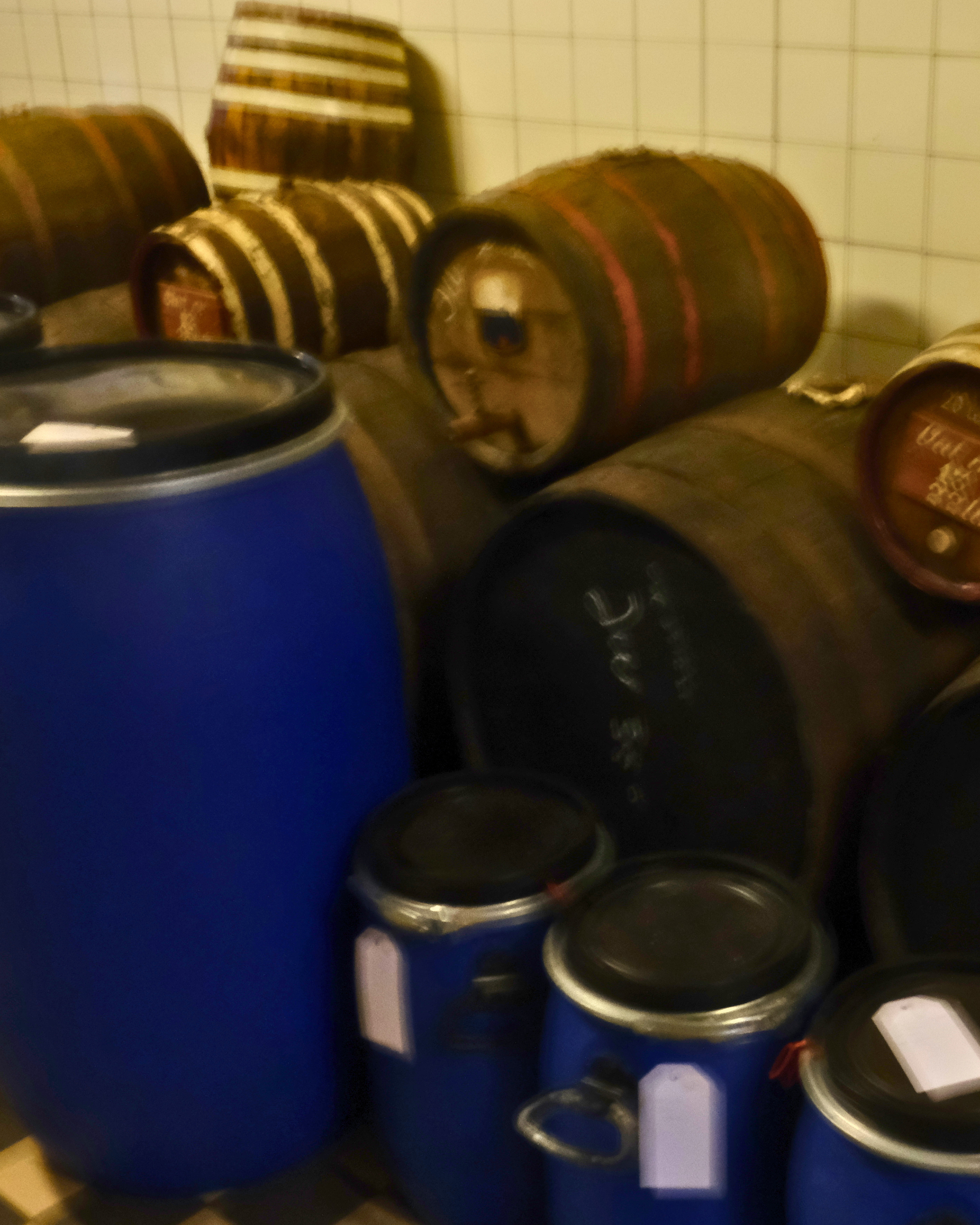
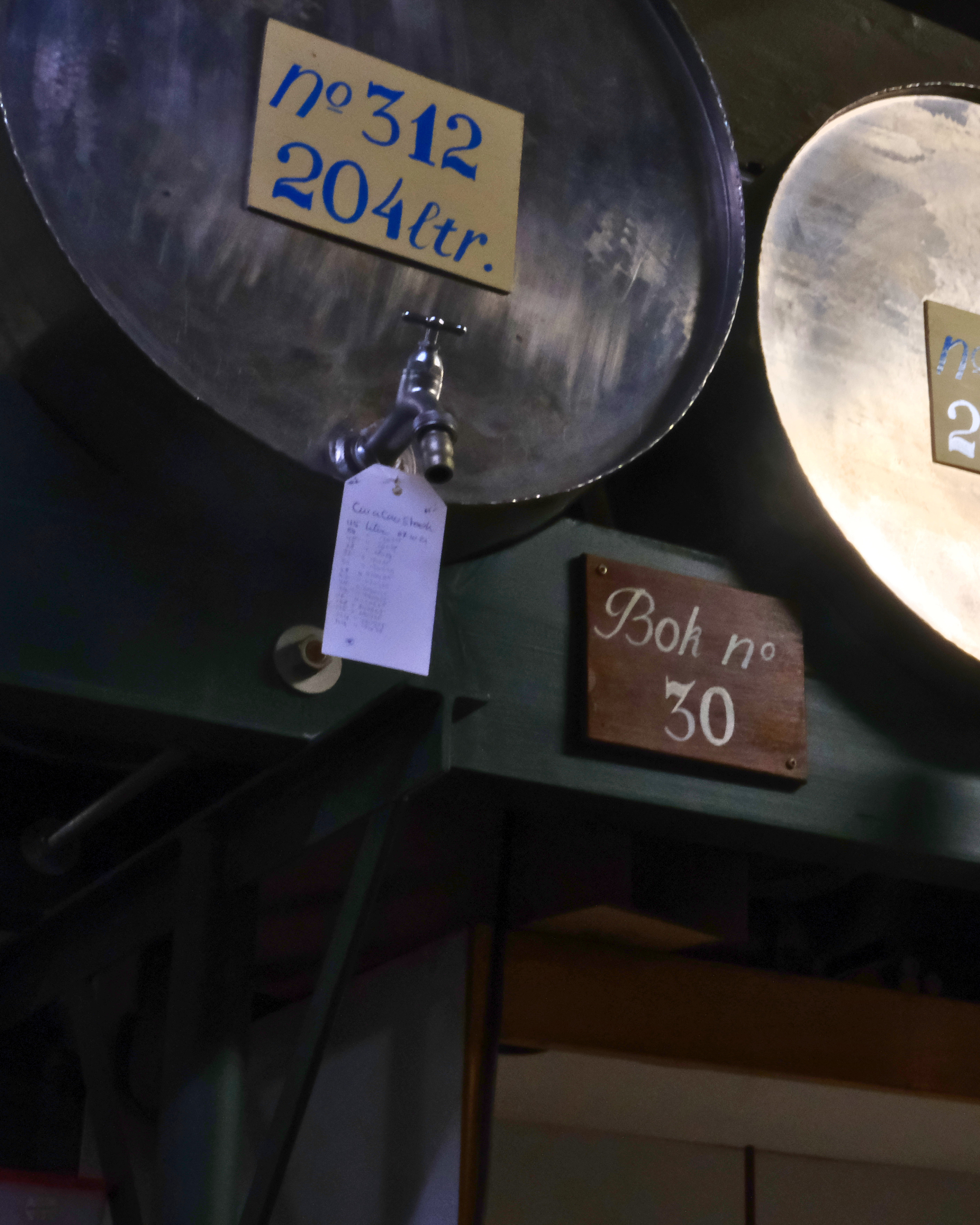
A particular treat in our visit was in visiting their aging cellar, located right below the distillery fl oor. No external storage here; all of their barrels are resting right at that spot! They have in fact hundreds of barrels, lined up on metal lines the call “Bocks”.
In many cases, a particular “Bock” contains a particular product.
The deeper you go in the cellar, the older the aim of what is inside. Even if a barrel is not used, it should be ater fi lled with at least 20 liters to avoid drying out of the barrel. All of the barrels are non-charred, used barrels where the aim is oxidisation instead of imparting particular wood tastes.
Here we continue with their genever off ering:
-Van Wees Amsterdamse Zeer Oude Genever is aged for roughly three months.
-There is a rich 10 year old bottling,
-A 15 year old,
-And a whopping 20 year old edition.
Alternatively they have three types of Koornwyn. This range, much diff erent from those seen at other distillers contains Juniper plus additional range of supporting botanicals such as Orris root. These are all called Rembrandt:
-the regular one that is aged for six months
-A Five year old.
-A rare ten year old.
Then the aged Roggenaar (Rye) bottlings:
-A three year old
-A very rare fi fteen year old.
Furthermore they have a unique range under the Ooievaar range:
-Loyaal Zeer Oude Genever, located exclusively on “Bock number 7”. This genever contains eight distillates further distilled two times each with its own set of botanicals. First aged separately, then aged together for an additional three years.
-Loyaal 5 years aged. Same as above but aged for fi ve years.
-Mirakel van Amsterdam. Named after the offi cial acknowledged Christian miracle that caused the fl ourish, and, according to some historians, the entire existence of Amsterdam. This genever uses a unique grain called emmer after having been challenged by Slow Food movement to create a product with it in 2013. It is aged for 2 years and named after the miracle
Strangely, no 100% malt wine is ever stated on the label, but we are informed the following are in fact 100%:
-Zeer Oude 10,15,20, Loyaal and Mirakel.
A good city-wide foundation
As Amsterdam is the distillery’s home turf, it s no surprise it is widely supported in bars around town.
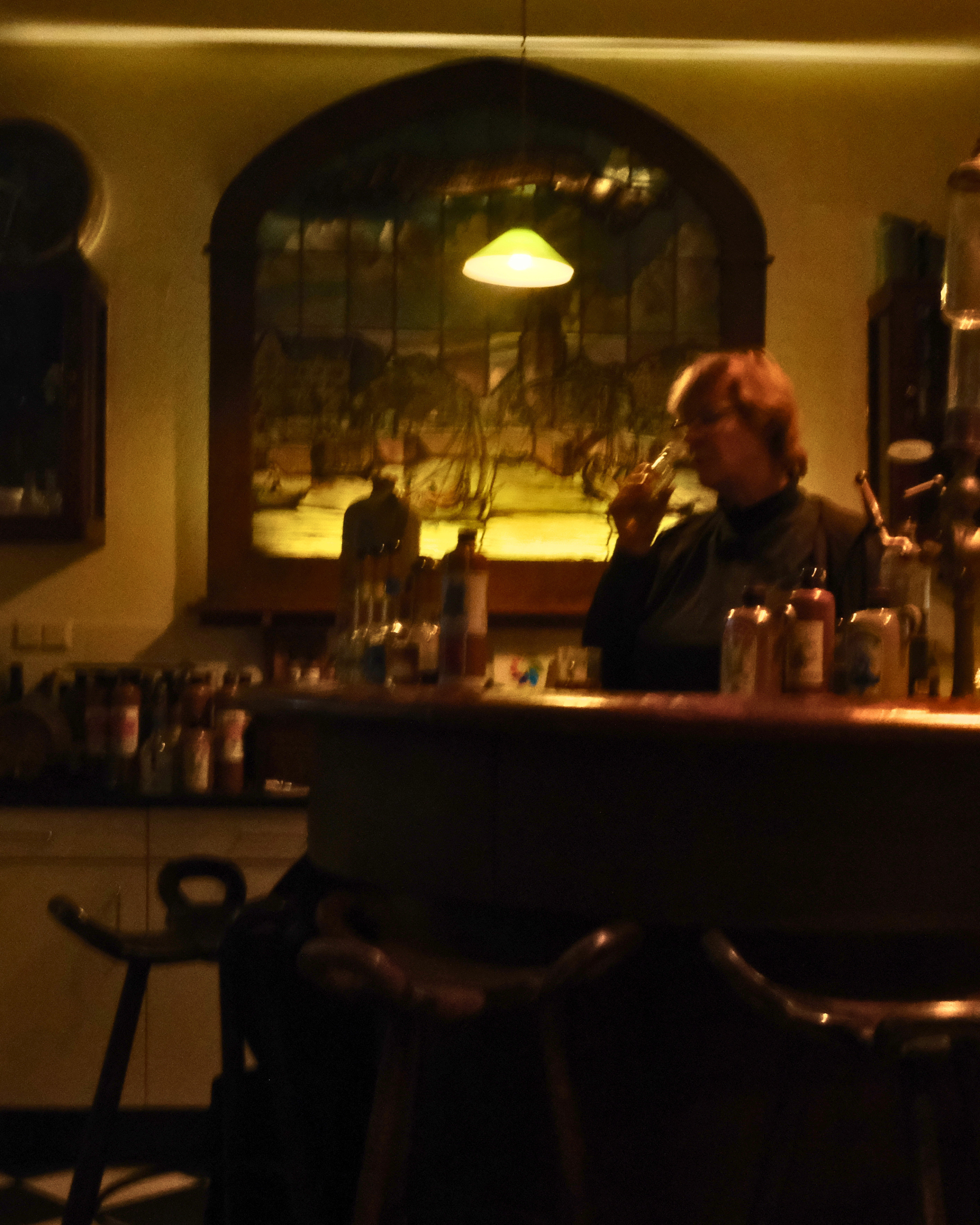
Additionally, they have a tasting room all their own in the centre, as well as a brown bar near Dutch Courage that is well worth a visit. Both of these are owned and managed by others, but stocked to the rim by (only) van Wees products.
When in town
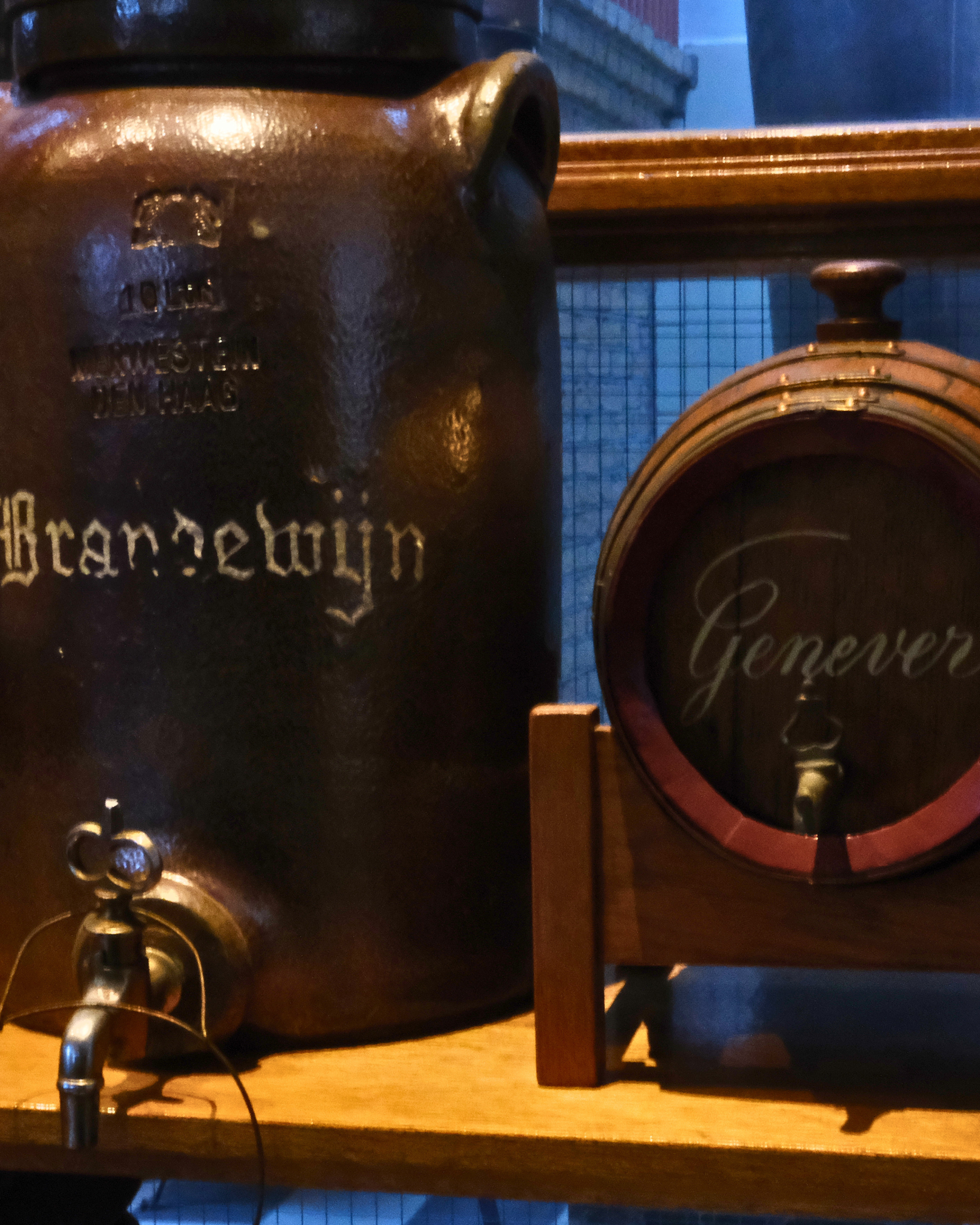
Symbolism means a lot for van Wees. Even the street it is located at, the “Triangle” street because it splits half way as a triangle, inspired them to create their “Three Corner Gin”. This gin contains only three botanicals in equal importance. The distillery does not have a visitor’s centre, but it does welcome visitors on certain announced events. Additionally you can book a visit if you email in advance, and you can visit their liquor store for a chat and purchase of some of their rarer items.
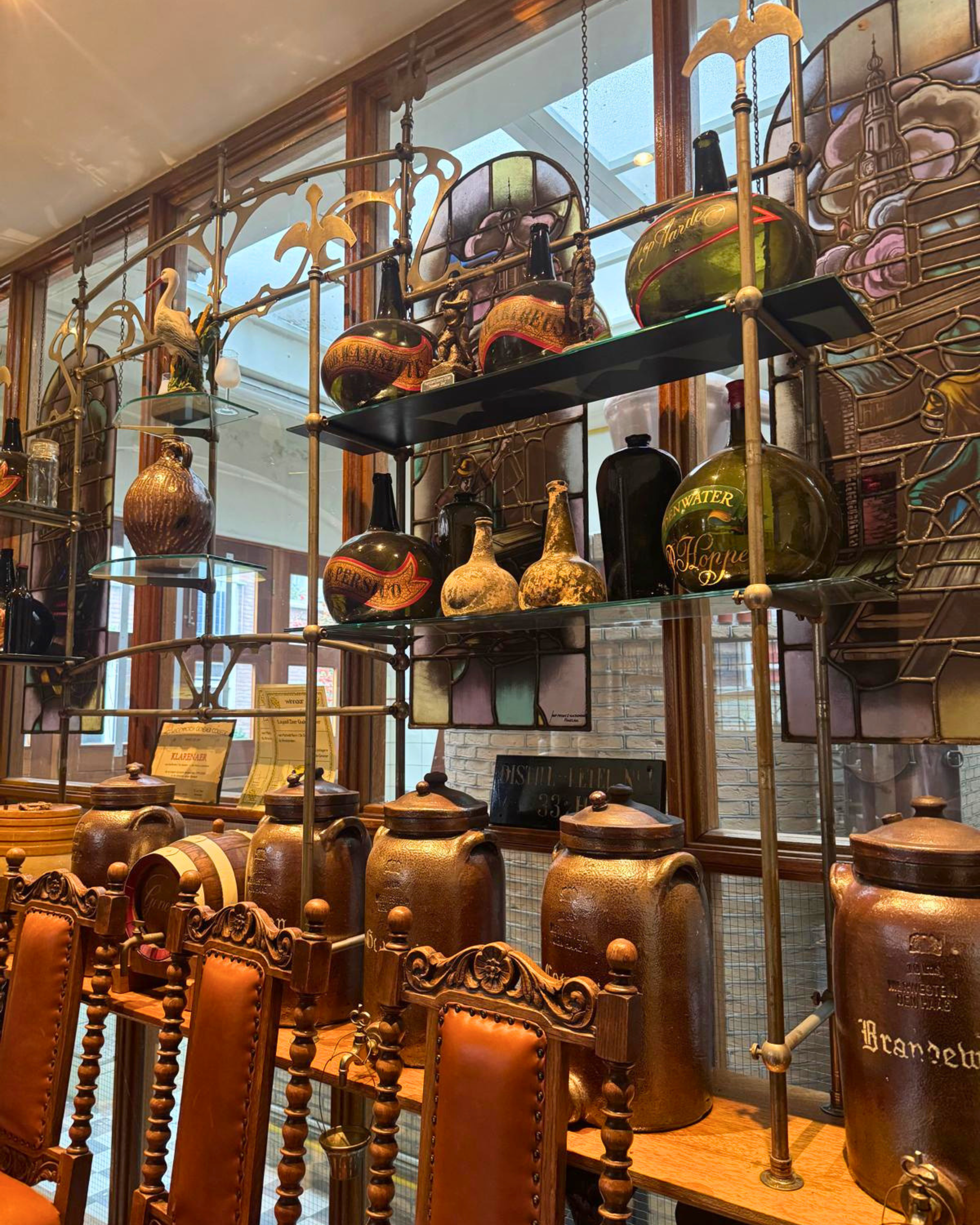
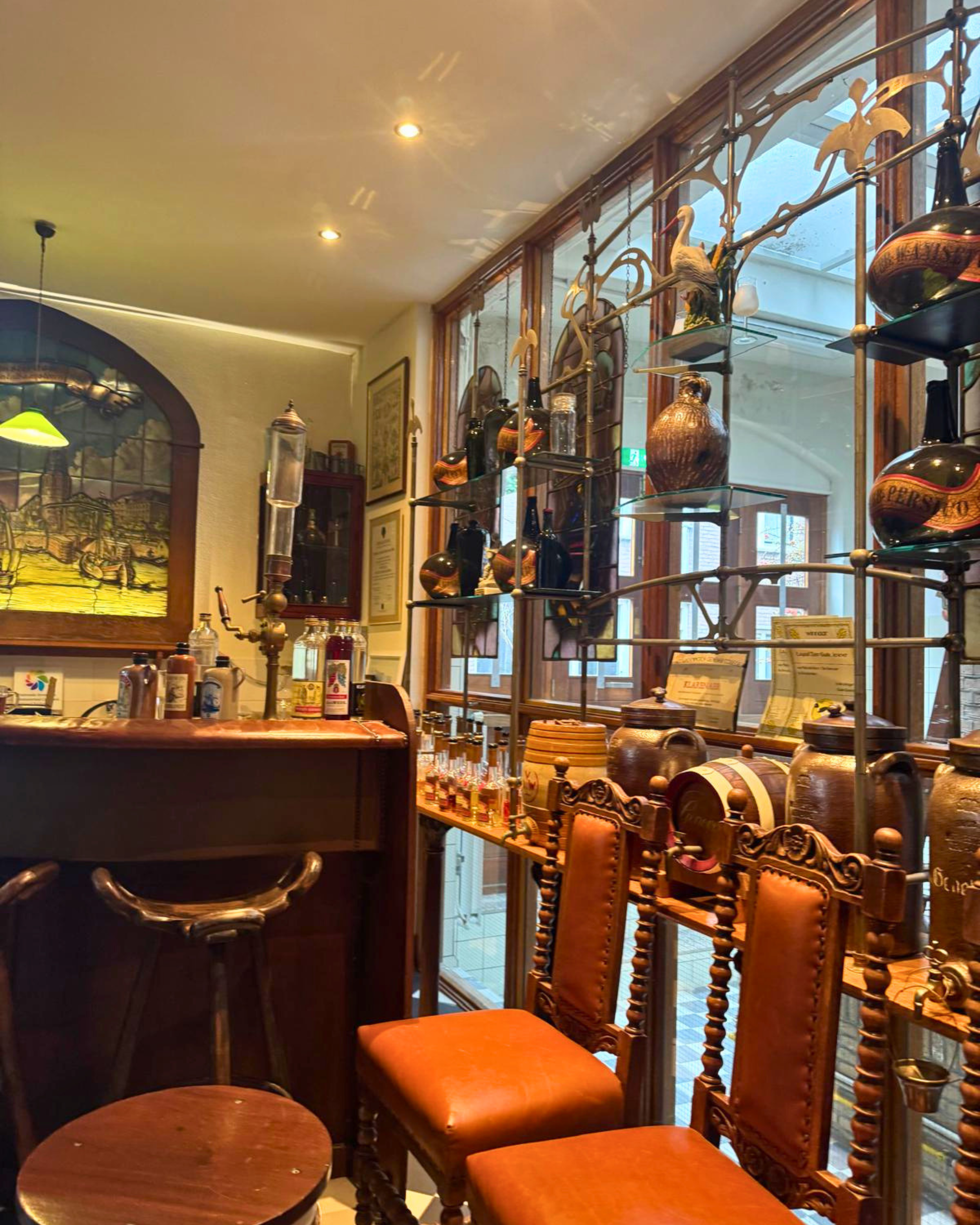
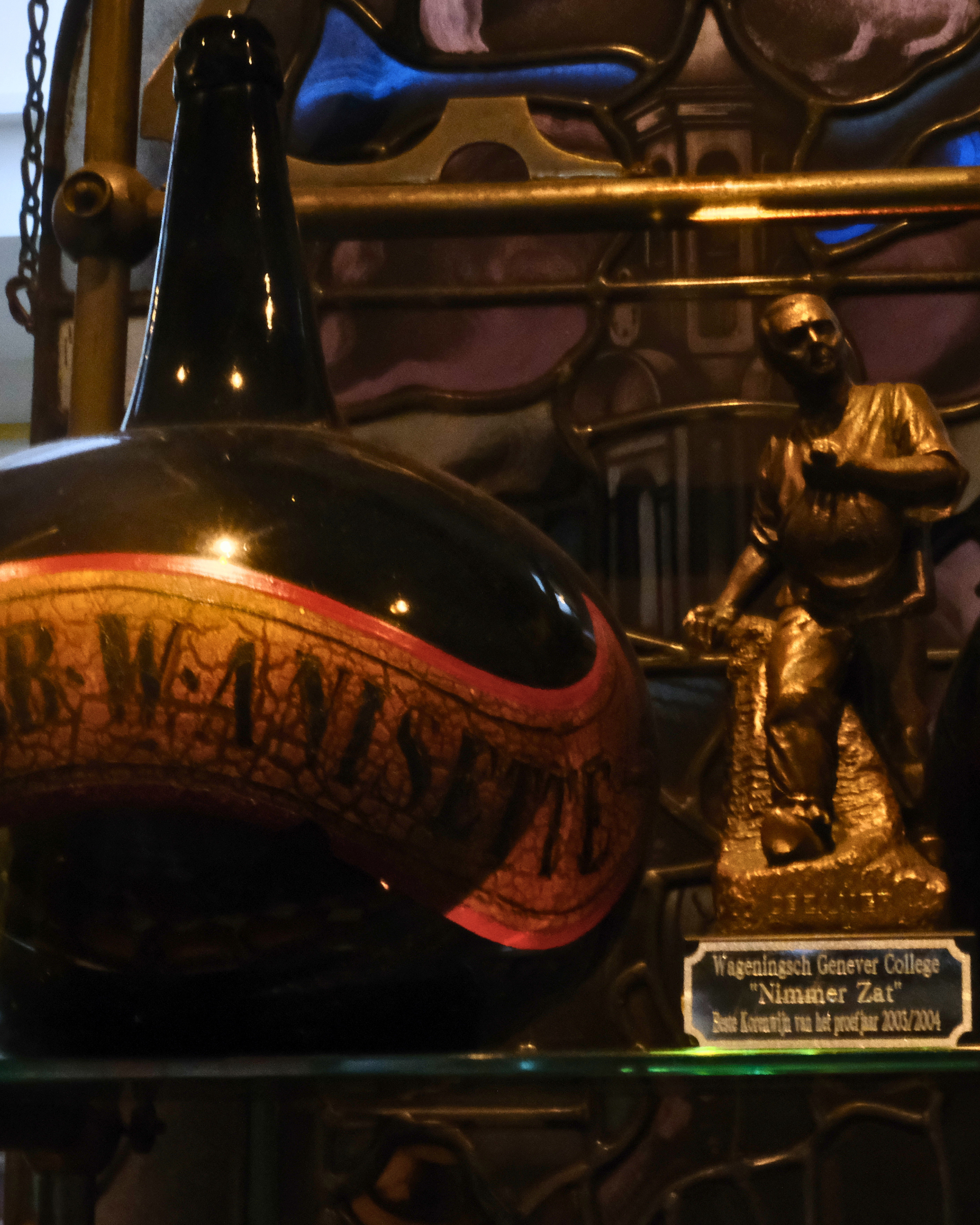
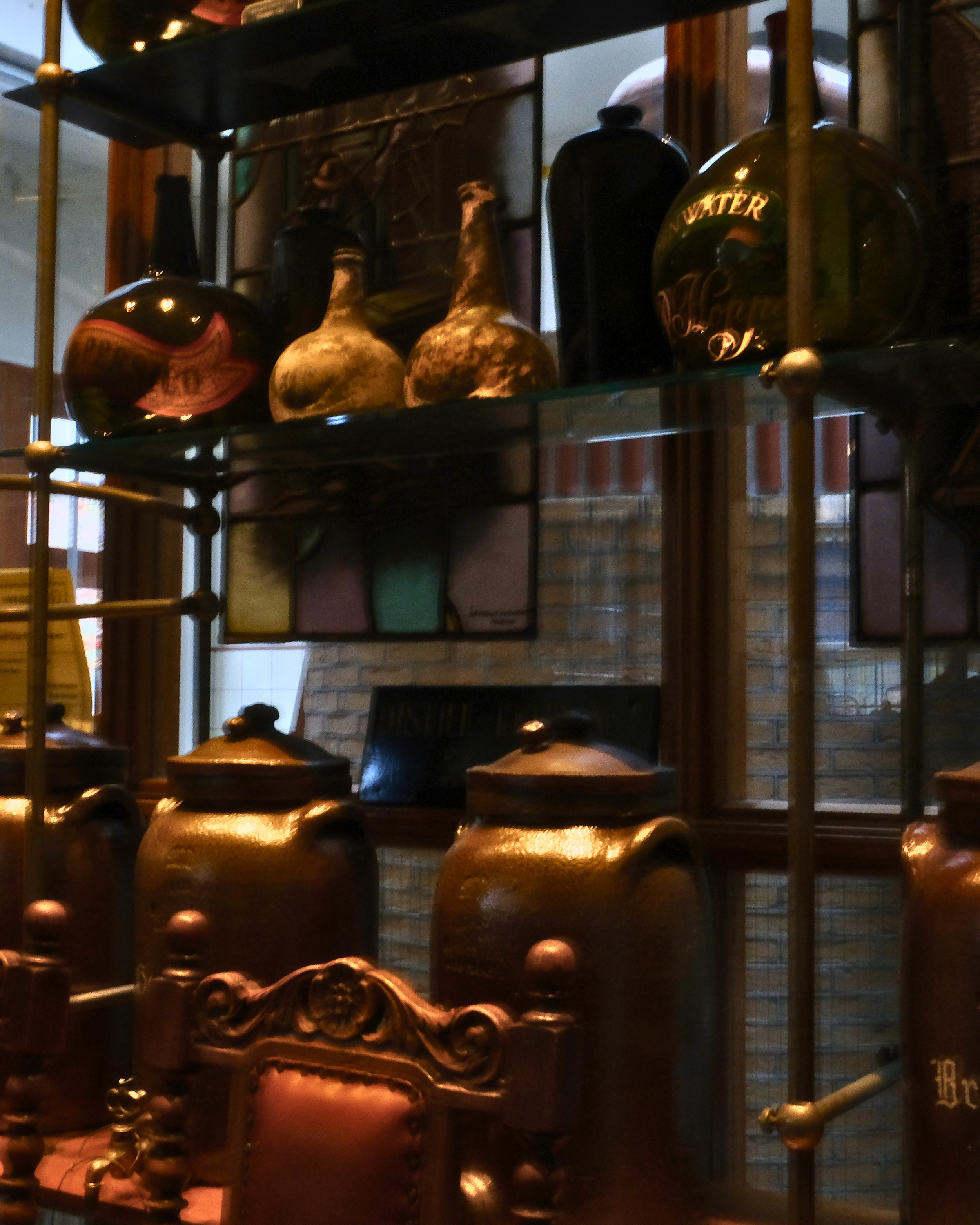
Certainly worth the visit as it is fi lled with historical (genever) artifacts, old bottles and limited editions.
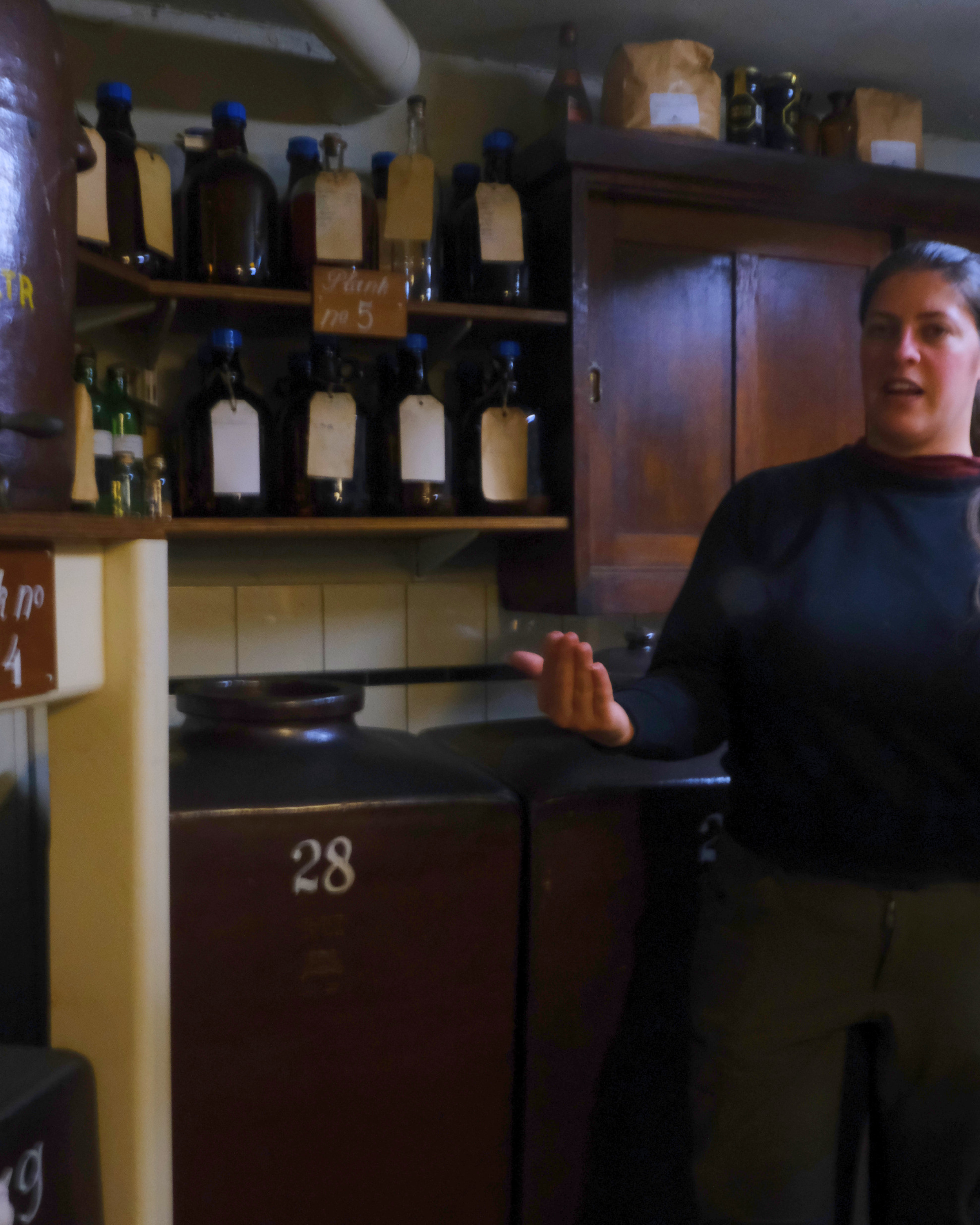
Perhaps even more impressive is the production site where you can see and smell the many infusions and essences and hear the intricacies of many of them, including the cellar and bottling.
Come Get some!
At Dutch Courage, we are proud to carry an extensive list of Van Wees liqueurs and genevers.
On our menu, we feature the “Kesbeke Martini” which features their Young Grain genever as a base.
During The Wallen Festival we always feature the offi cial cocktail of the Festival; one that people can make themselves in a fast-paced, walk-in cocktail workshop. It features “Juff ertje in het groen” a liqueur that contains mint and is based on a poem by Martinus Nijhoff , one of the Netherland’s greatest poets, in 1914. Apparently the poem itself honours both a fl ower, and a visit to competitor Wynand Fockink and goes as follows:
Nauw is de steeg, moeilijk de pelgrimstocht,
Die naar uw zuivre heerlijkheden voert -
Het bartje is fl esch-bewand en hout-bevloerd:
Hier is het, waar ik uw bedwelming zocht!
En als ge weer ten toonbank voor mij staat -
Uw lichaam is groen-glanzend, vol en rond,
Gracieus zich plooiend tot eenen wijden mond -
Is 't of ge wenkt, als mijn mond tot u gaat.
Als onze monde' ontmoeten in een kus,
Drink ik uw vuur'ge kus, wijl ik zoo mijn
Brandend verlangen met uw branden blusch;
En uw begeerte is slechts in mij te zijn:
Om in mij òp te gaan in éénen zoen -
Zoo is de liefde, juff ertje in het groen!
Although a plant with the same name exists, it is not used for the production of the liqueur. Instead, van Wees uses peppermint, citrus peels and aniseed and balanced out with cinnamon. Be sure to try it if you are around end of June and make your own!
Van Wees Oude, Mirakel and Loyaal all have a safe spot on our backbar, with Loyaal being a big hit with our clientele. Rest assured we also carry their Rembrandt Korenwine for those looking something smooth, and although we do not have their entire liquer range, we certainly have more than a handful, including their bitter. Amsterdam Elixer is among them; it is their take on Chartreuse.
Additionally we are proud to have their 10, 15 and 20 year old as well for those seeking something exceptional. So whether “Loyaal to tradition” or in for a “Mirakel”, come fi nd it!