11/9/26
Creativity in a Bottle: Traditional Dutch Liqueurs Part One
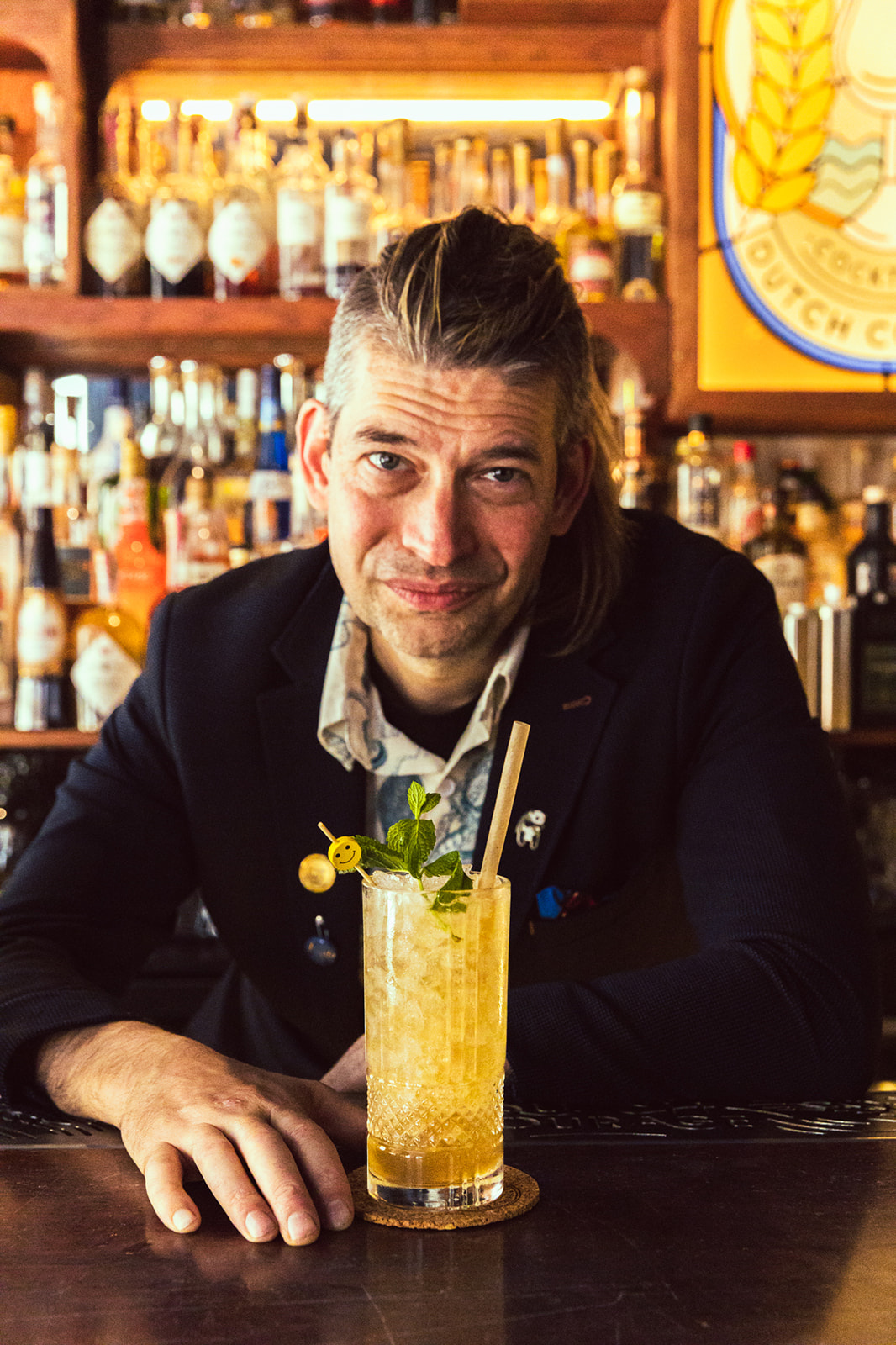
When people think of the contributions of the Netherlands to the drinks and spirits world, typically genever is the first, and possibly, the only thing that comes to mind. However, it was liqueurs that first caught the producer’s mind. The likes of De Kuyper and Bols liqueurs are large remnants of this skill in liqueur producing, but traditionally, the liqueurs produced were quite different from the single-note coloured bottles produced in this day and age. In this series, I delve into the traditional liqueurs that were created and enjoyed all those hundreds of years ago.
A Plethora of Fruits and Spices
All of the oldest names in genever did in fact not start with the production of genever at all. When trade of spices and exotic fruits started, the question of use and prolonging their shelf-life were always an important factor.
Additionally, many of these were attributed certain medical values — rightly so in many cases —, or even life-prolonging attributes in others. Elixirs and potable bitters in particular fell under the latter, existing more on the medical realm than the enjoyment area, although it was often both.
Furthermore, one must realise the arrival of urban civilisation brought serious health and foul odor concerns. A sip of something as pleasant as a rose or violette liqueur is much more appreciated under these difficult surroundings.
Finally, sugar was considered a luxury item, and as such a liqueur was seen as a fancy drink for all; male and female. It is odd that the presence of both a wide range of liqueurs AND later on that of spirits has never brought on the combination made cocktails. Instead, both were drank straight; however the complexity of these Dutch liqueurs can almost be seen as a cocktail in a bottle as we will see later on.
The Players, Past and Present
Although many of the producers of the past no longer exist unfortunately, there are still a few that produce traditional Dutch liqueurs. It is interesting to see how much they can differ, as opinions on the “real” ingredients of a certain assorted traditional liqueurs can change from producer to producer.
Van Wees has one of the largest ranges of these. And Wynand Fockink is another name that has a large number of these as well. ‘t Nieuwe Diep also has a broad range, and Van Kleef in The Hague has a nice selection as well. The Likeur- en Jeneverfabriek Amsterdam has a large assortment as well, aiming more at the retail outlets.
Birth... Hansje in de Kelder
Many of the traditional Dutch liqueurs stipulate a particular moment or celebration to be enjoyed with, a practice that is once again quite the buzz-word in spirits creation as we speak. But then 400 years prior. Birth and pregnancy is a particular popular celebration among these. Today we focus on “Hansje in de Kelder”, aka “Jack in the cellar”.
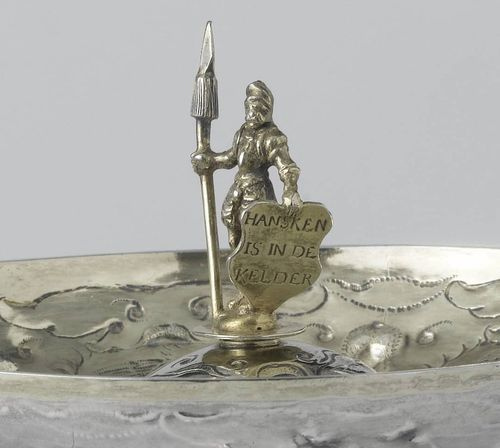
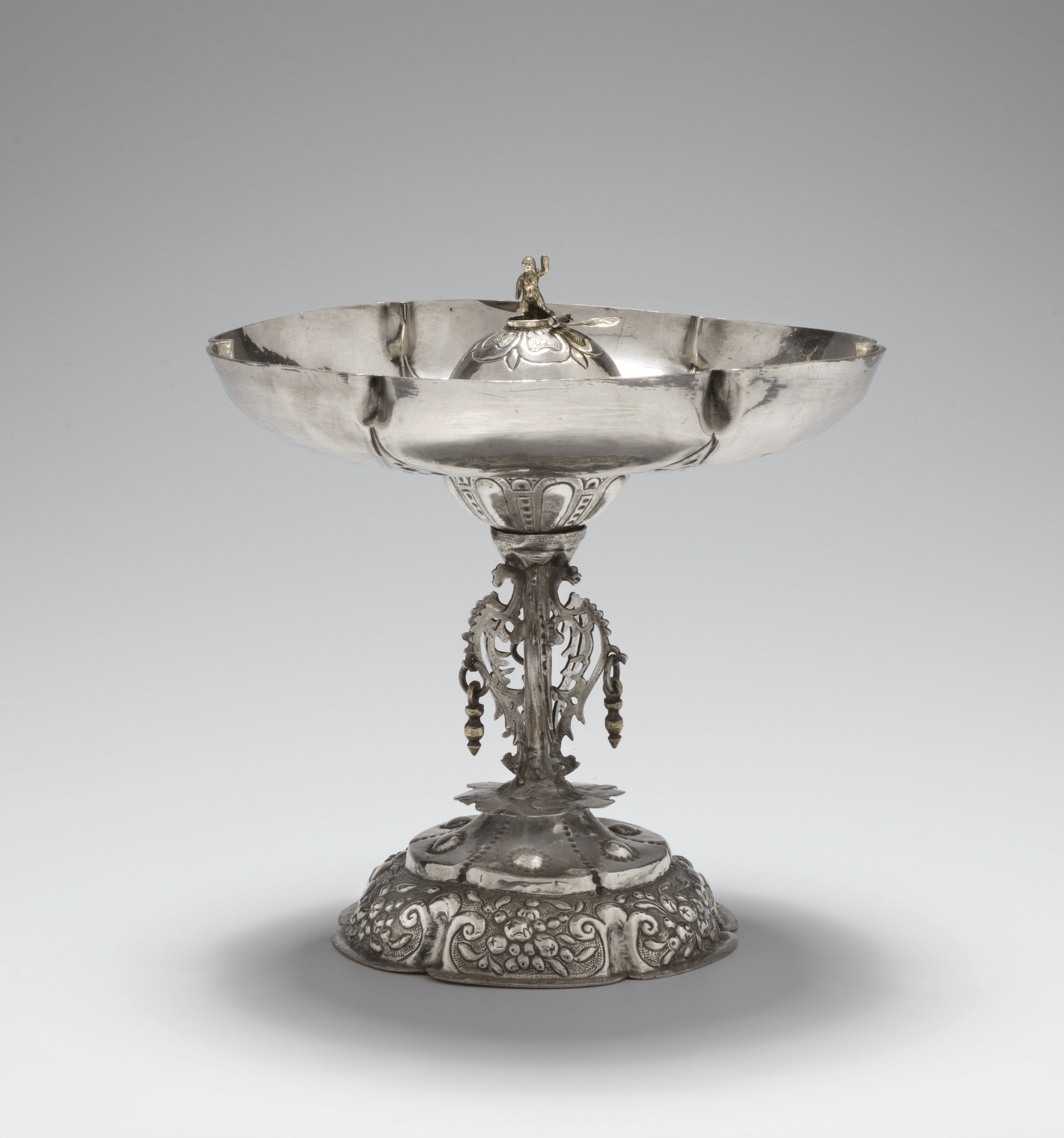
This liqueur was created in the early 17th century. One would gather family and friends and pour this liqueur in a special cup. As it is poured, a hidden baby appears, signifying an upcoming birth.
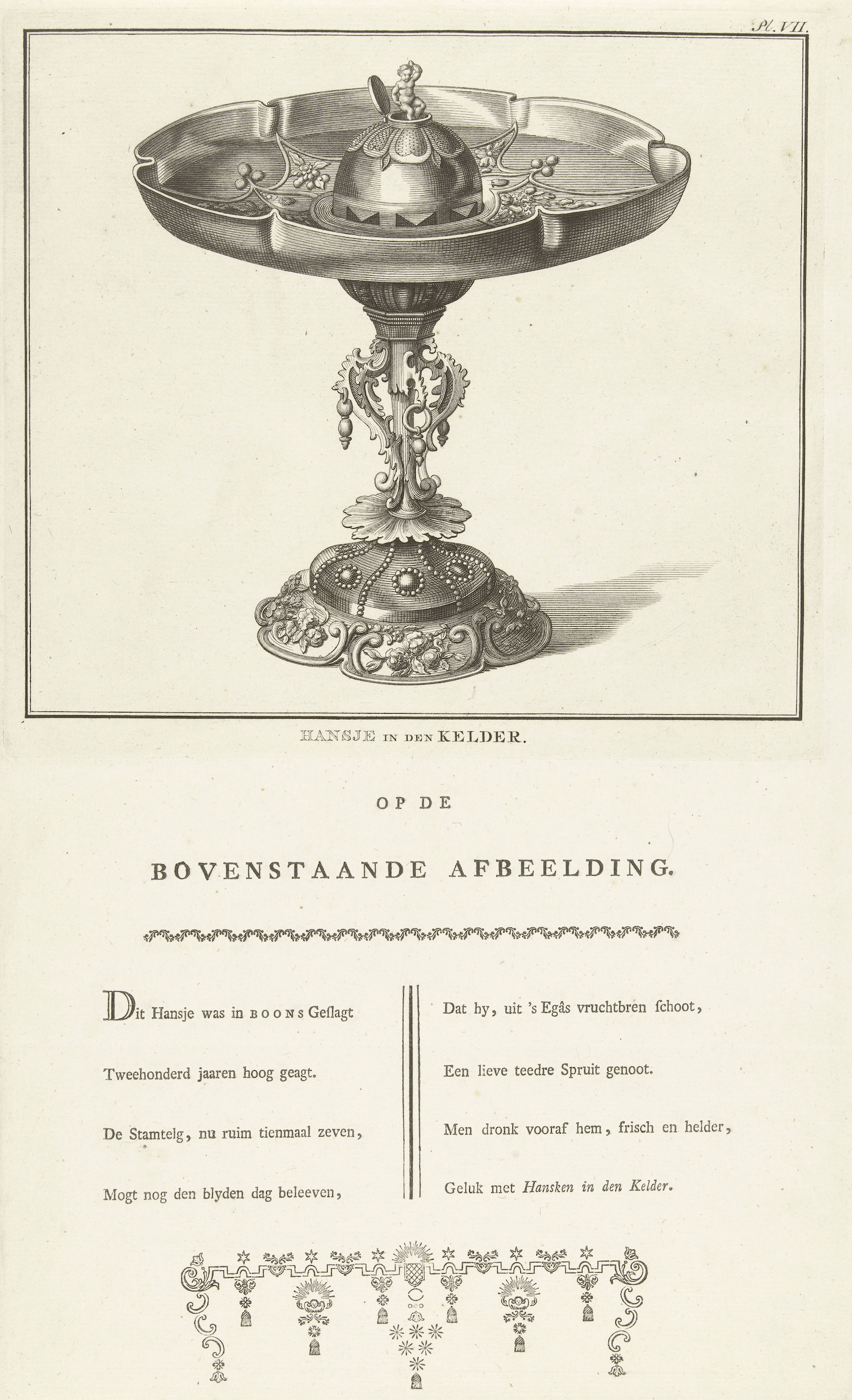
This tradition did not only exist in the Netherlands, but also in other so-called Hanze Countries. Hanze was a group of cities in Europe that collaborated in trade routes, starting in the early middle ages. These countries include Denmark, Germany, England and Belgium.
Jack in the cellar has translations in all these languages, and for baby girls there was the saying of Maeken in ‘t Schapraueiken: “Maaike in the Sheepshed”.
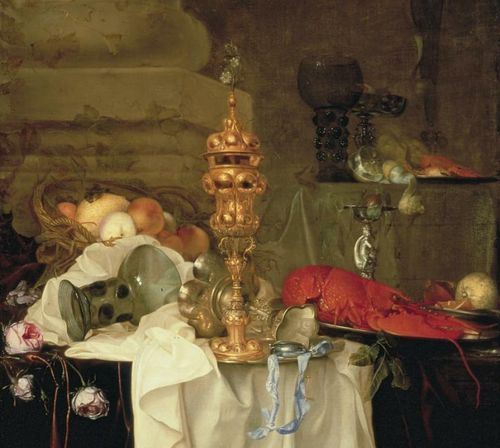
Later, the expensive silver cups were changed to glassware featuring Hansje in de Kelder, before the practice disappeared entirely.
Who Makes It?
At present, four main producers make this liqueur. Those are ‘t Nieuwe Diep, Van Wees, Wynand Fockink and Likeurfabriek Amsterdam.
The liqueur is believed to have been created in Amsterdam, and named after the cup, which was until then probably filled with wine instead of its namesake drink. This explains why it is only the Amsterdam producers still making this product, and not the other Hanze Countries or other parts of the Netherlands.
What’s in It?
The current producers vary substantially. The only constant is that it is orange in colour, and all contain cinnamon as a main aroma note.
Van Wees differs the most, featuring cherries, lemon, cardamom and rose.
‘t Nieuwe Diep includes the same lemon, but uses apricots, orange and orange flower.
The Amsterdamse Liqueur factory contains the same as ‘t Nieuwe Diep but omits the lemon.
Wynand Fockink is the same as ‘t Nieuwe Diep, but omits the orange flower and instead of lemon uses bergamot to achieve both the citrus note and the aroma.
What Do You Do with It?
Hansje in de Kelder is quite a fresh liqueur, lending itself well for fruity, summery drinks.
Additionally, its lemon and orange elements lend it well as a replacement in drinks that normally use dry Curaçao liqueur. At Dutch Courage we featured the Wynand Fockink one in the “Lux” cocktail, named after Timo’s daughter. Featuring Vieux, Chartreuse Elixir, lemon, tea and of course Hansje in de Kelder, it was quite the popular signature.
Come Get Some!
At Dutch Courage, we are proud to carry Hansje in de Kelder from ‘t Nieuwe Diep, Van Wees AND Wynand Fockink. Try them all in a liqueur tasting and find your favourite, ask us to whip up a Lux cocktail, or an on-the-spot creation. See you at the bar, Proost!